6-layer structure for understanding custom orthotic insoles | Reduces pressure on the sole of the foot during prolonged standing and walking, ensuring the daily health of the feet
Many people experience persistent dull pain in their feet and heels after long periods of standing at work or after going out for shopping. Those with flat feet, high arches, inward or outward foot deformities, or plantar fasciitis will still feel tired in their feet even after wearing comfortable shoes for a long time. People often overlook the fact that a pair of suitable insoles is the key to distributing the pressure on the feet and improving gait.
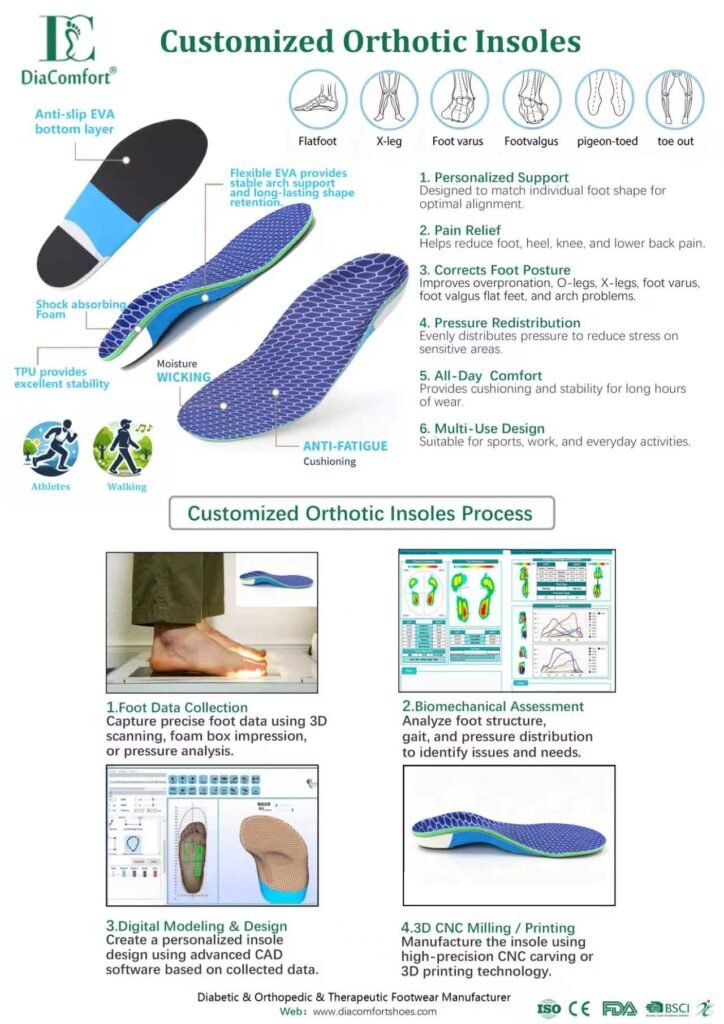
The DiaComfort custom orthotic insoles adopt a 6-layer composite structure. They are not simple universal insoles but are customized according to each person’s foot shape, taking into account both support and daily wear comfort. You can browse our full range in the custom orthotic insoles product catalog. Let’s take a closer look at them together.
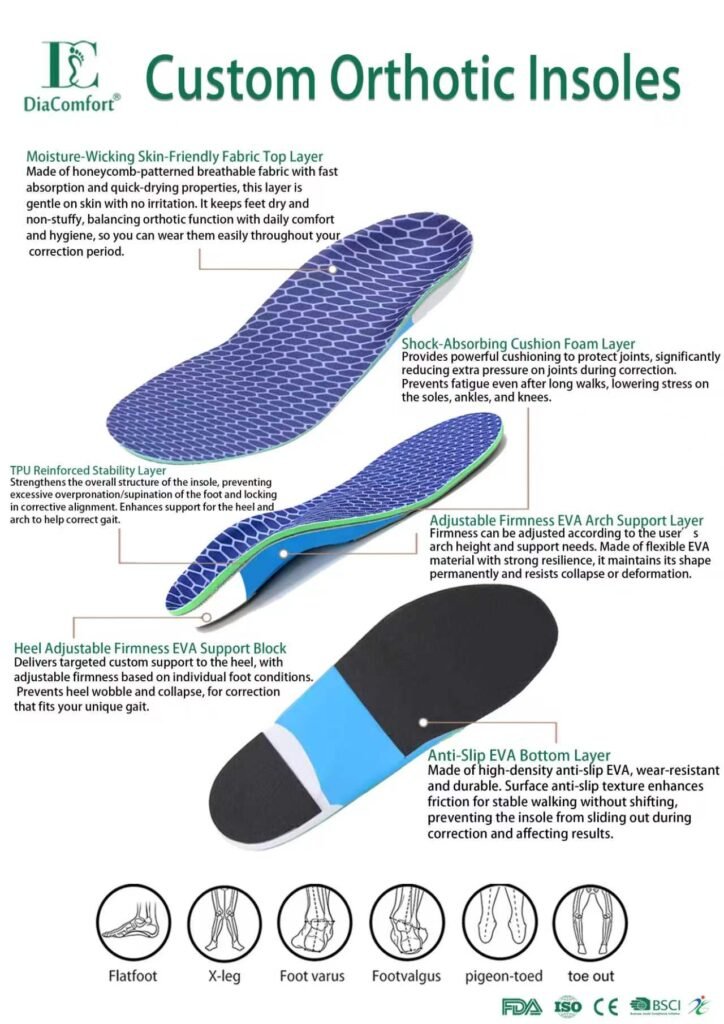
- Surface moisture-absorbing and skin-friendly fabric layer
The top layer of the orthotic insoles is a honeycomb breathable fabric. It absorbs moisture quickly and dries efficiently, is gentle on the skin and does not cause irritation. It is not likely to make the feet feel stuffy or sweaty for a long time, keeping the soles dry. It also takes into account corrective functions and daily hygiene. Even when worn for a long time, it is unlikely to develop an unpleasant odor.
- Shock absorption and cushioning foam layer
This functional layer serves to dissipate ground impact forces generated during foot strike, lowering extra compressive stress imposed on articular structures throughout ambulation. It helps mitigate physical exhaustion induced by extended standing or lengthy walking sessions, decreases persistent loading on plantar tissues, talocrural joints and knee articulations, and delivers mild protective effects for lower-extremity joints.
- TPU Reinforcement Layer
The TPU reinforcement layer boosts the global structural stiffness of orthotic inserts. It restrains excessive foot inversion or eversion and maintains the foot within proper biomechanical alignment. This component reinforces supportive effects for the calcaneus and foot arch, modifies ambulatory patterns, and delivers structural assistance to rectify irregular walking postures.
- Adjustable hardness EVA arch support layer
Flexible EVA with outstanding toughness is adopted for this component. Its stiffness can be customized in accordance with each wearer’s arch height and personalized support demands. The material retains stable performance after long-term application and resists collapse or distortion, sustaining consistent arch support geometry to satisfy the foot correction demands of diverse users.
- Adjustable hardness EVA heel support pad
This insert component delivers targeted calcaneal support, with adjustable stiffness customized to match each user’s unique foot status. It minimizes heel sway and structural collapse, adapts to individual ambulatory patterns, and prevents compensatory discomfort triggered by calcaneal instability.
- Bottom anti-slip EVA base
This base layer is constructed from high-density EVA material featuring anti-slip and abrasion-resistant properties, paired with textured surface patterns. During ambulation, it secures the whole insert firmly inside footwear to stop unintended displacement. Such design stabilizes orthotic performance and extends the service life of the product.
✅ Suitable for various foot problems
This personalized orthotic insoles is applicable to individuals with pes planus, genu valgum, foot inversion, foot eversion, pigeon-toed gait, and toe-out gait issues.
Reminder: Custom orthotic devices belong to auxiliary corrective appliances rather than formal medical treatments and pharmaceutical interventions. Wearing these inserts during foot developmental stages or daily rehabilitation cycles can optimize personal ambulatory posture, inhibit the progressive deterioration of foot malformations, and alleviate compensatory fatigue and strain accumulated on the knee joints and lumbar region.
Global Authoritative Certifications for Reliable Quality Assurance
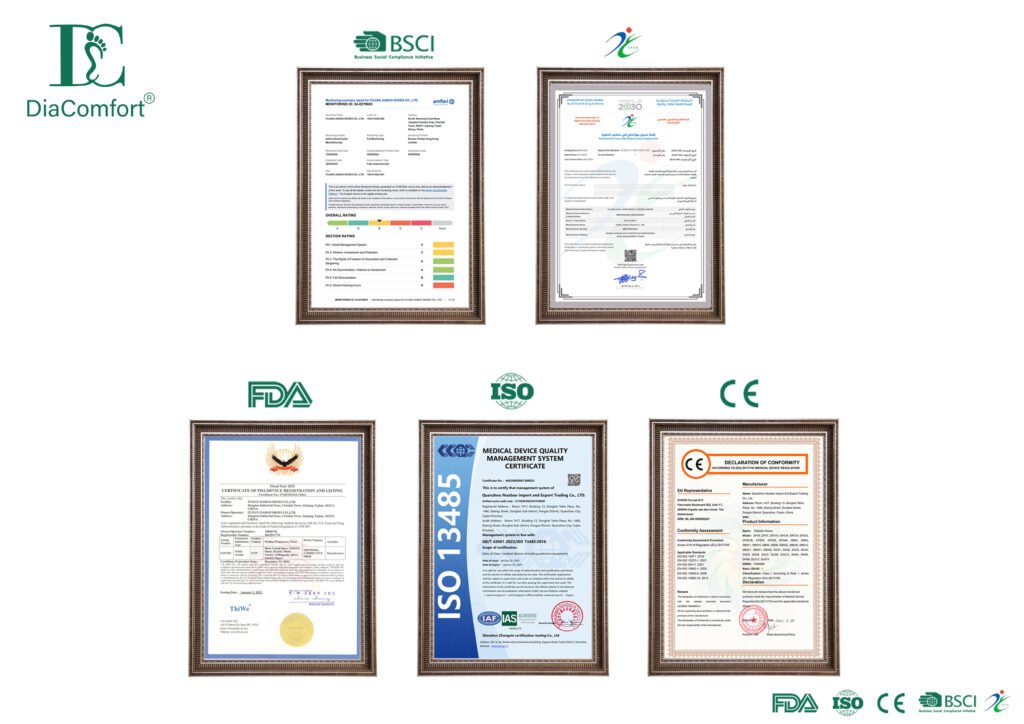
All bespoke orthotic insoles from DiaComfort are subjected to stringent multi-dimensional performance tests and hold four top-tier international authoritative qualifications, covering FDA, ISO, CE and BSCI.
- ✅ FDA Safety Certification: All skin-contact raw materials have passed systematic safety verification, effectively protecting the delicate plantar skin from adverse irritation.
- ✅ ISO Quality Management System Certification: Implementing full standardized management from raw material screening to finished product delivery, which guarantees consistent and reliable quality for every customized insole.
- ✅ CE EU Compliance Certification: The product fully conforms to EU health and safety specifications, with its fabric materials and manufacturing techniques verified through rounds of professional detection.
- ✅ BSCI Social Responsibility Certification: The entire production procedure adheres to global labor protection and environmental protection standards, realizing full lifecycle traceability of all products.
Personalized orthotic insoles manufacturing procedure
- Accurate Foot Data Acquisition: High-precision foot parameters are captured via three mainstream professional methods, including 3D scanning technology, plantar pressure distribution testing and physical foot mold sampling.
- Professional Biomechanical Evaluation: Comprehensive analysis is conducted on individual foot skeletal structure, daily ambulatory patterns and plantar pressure distribution features, so as to accurately diagnose foot malfunctions and confirm targeted correction demands.
- Exclusive Digital Modeling Design: According to the collected complete foot data, professional CAD design software is applied to construct an exclusive three-dimensional structural model tailored for individual foot characteristics.
- High-Precision Intelligent Manufacturing: Adopting advanced CNC milling engraving technology and 3D printing equipment, brand-new personalized orthotic insoles that perfectly match users’ foot conditions are precisely manufactured.
Practical Guidelines for Foot Care and Insole Upkeep
- Build up wearing time progressively for brand-new orthotic insoles. Start with short daily wearing sessions to help your feet adapt to the arch support effect, and avoid prolonged continuous wear at the very beginning.
- Maintain dry conditions for your inserts. Remove them regularly for air circulation and natural drying. Damp environments facilitate bacterial growth, which may shorten the service life of the product.
- Reserve adequate inner room within your footwear. Never squeeze thick orthotic insolesinto narrow, tight-fitting shoes.
- Seek professional medical advice prior to use if you have open foot lesions or advanced diabetic foot complications.
If persistent plantar aching occurs after long-hour standing, or you struggle with flatfoot, foot inversion/eversion or plantar fasciitis, DiaComfort bespoke orthotic insoles will be your ideal pick. These tailor-made inserts matching your unique foot anatomy allow you to experience effortless comfort with every stride.
For more professional foot health knowledge, you can visit the American Podiatric Medical Association (APMA) official website.