How do diabetics choose Diabetic Insoles? 5 practical tips to distribute foot pressure and make walking more comfortable
Diabetic patients may experience impaired foot sensation and circulation. Once friction or blisters occur on the sole of the foot, it is difficult for the wound to heal and the risk of infection is high. When choosing Diabetic Insoles, one should not only consider their softness and hardness, but also focus on factors such as pressure reduction, breathability, and fit, in order to reduce the risk of skin damage.
Prioritize the internal space of the shoes and avoid blindly choosing thick models
Many people believe that the thicker the insole, the more comfortable it is. However, an overly thick insole will occupy the internal space of the shoes and squeeze the toes, creating localized pressure points.
– The edges of the insole are smooth without any protruding hard edges, allowing the toes to naturally stretch when wearing.
– After being placed in the shoes, it does not squeeze the feet, and there is still ample space inside.
If the shoes become noticeably tighter, even if the material is soft, it is not recommended to use them for a long time.
Choose moisture-wicking and breathable fabrics to keep your feet dry
A humid and hot environment is conducive to the growth of bacteria, softens the skin on your feet, and increases the likelihood of damage.
– Select a smooth, sweat-wicking fabric on the surface that doesn’t shed or tangle
– Take it out and air dry regularly; replace it promptly if there is wear, odor, or deformation
Focus on Plantar Pressure Redistribution
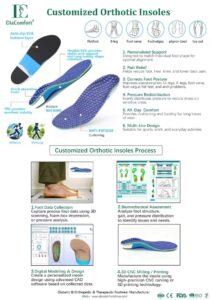
Persistent localized loading on foot tissues may result in callus buildup and pressure indentations. Individuals with diabetes require Diabetic Insoles capable of balancing plantar stress.
- The Diabetic Insolesshall feature moderate shock absorption and resilient performance, instead of low-density sponge materials prone to deformation under weight-bearing.
- Proper arch support helps spread mechanical load across the calcaneus and forefoot uniformly.
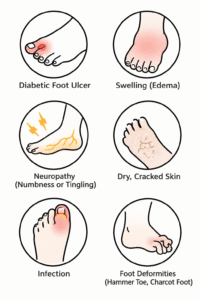
⚠️ Important Notice: Diabetic Insoles function merely as pressure-relieving auxiliary products and cannot substitute clinical medical treatment. Medical consultation is strongly recommended prior to use for patients presenting foot ulcers, swelling, redness or foot deformities.
Stable Heel Construction to Minimize Heel Wobble While Walking
Fluctuating heel positioning during gait generates excessive rubbing, which elevates the chance of foot tissue trauma.
- The integrated heel shell offers rigid structural reinforcement, keeping the Diabetic Insolesfrom shifting or deforming under body weight.
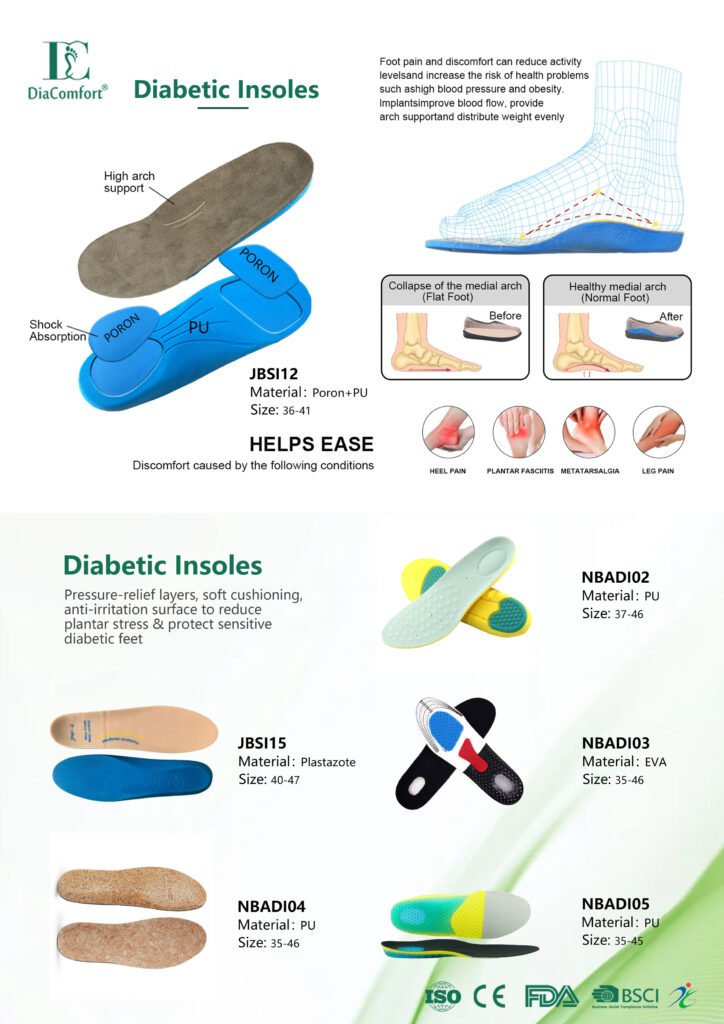
- Such inserts are well-suited for mild daily activities, such as routine strolls and supermarket errands. Patients suffering from serious diabetic foot complications must choose tailor-made Diabetic Insolesstrictly following the personalized medical scheme prescribed by clinicians. You can view our full range in the Diabetic Insoles product catalog.
Proceed with gradual fitting and conduct thorough foot examinations
Diabetic individuals typically experience diminished plantar sensory perception. Compression-related tissue damage may develop even without obvious painful symptoms.
- Begin the adaptation phase with 1 to 2 hours of daily wear, then slowly extend the wearing period over time.
- Once you take off the Diabetic Insoles, examine the plantar surface and toes for reddish marks, blisters or pressure indentations.
- Avoid manually cutting or modifying the insoles, and never use inserts shared with other people. Cease usage right away and consult medical professionals, in cases of skin laceration, redness, swelling or exudation on feet.
Reliable Certifications for Our Diabetic Insoles
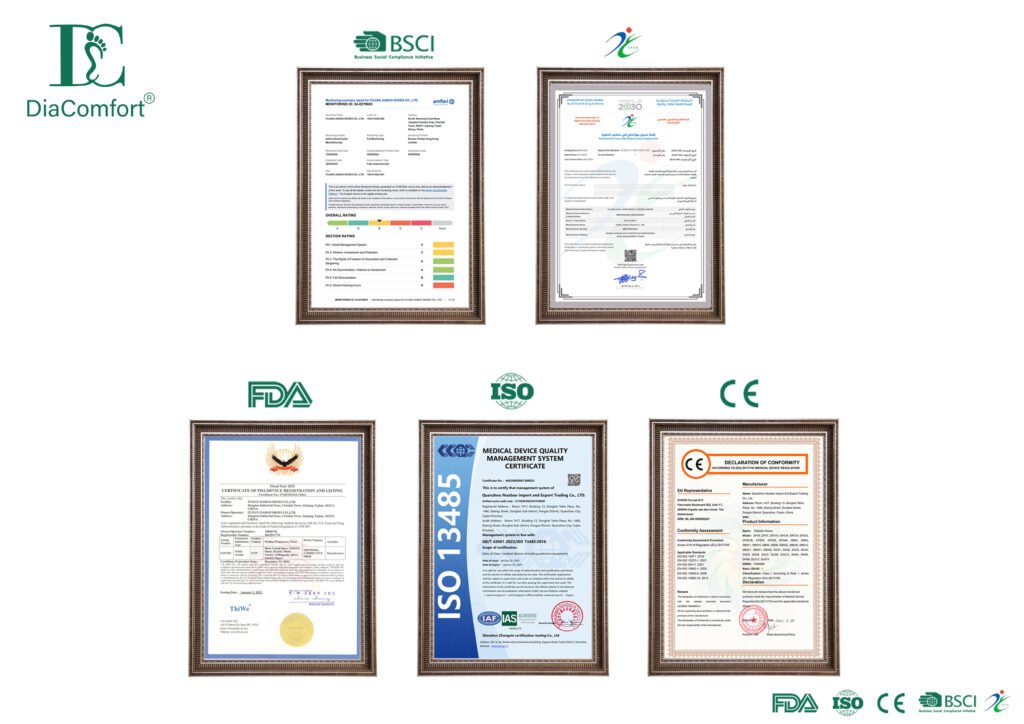
- Our DiaComfort Diabetic Insoles pass multiple strict performance tests and hold internationally recognized authoritative certifications: FDA, ISO, CE and BSCI. Every production link, from raw material screening to finished product delivery, undergoes rigorous quality supervision.
- ✅ FDA Safety Certification: All materials in direct contact with skin pass safety assessments to protect delicate plantar skin.
- ✅ ISO Quality Management System Certification: Standardized manufacturing workflow guarantees consistent quality for every pair of insoles.
- ✅ CE European Certification: Products comply with EU health and safety standards, with fabrics and production craftsmanship inspected repeatedly.
- ✅ BSCI Social Responsibility Certification: Manufacturing activities follow global labor and environmental norms, supporting full product traceability throughout the whole lifecycle.
Summary
When shopping for Diabetic Insoles for diabetic feet, adhere to these five key selection principles:
- Choose Diabetic Insolesof proper thickness to match your shoe cavity and avoid compressive force on the toes.
- Prefer materials equipped with sweat-draining and air-permeable characteristics to preserve dry skin on the plantar surface.
- Go for Diabetic Insolesthat balance plantar mechanical load and relieve focal pressure on localized foot areas.
- Pick variants strengthened with heel supporting structures to reduce insert movement as you walk.
- Increase wearing time progressively and perform skin checks on your feet after each wearing session.
Well-chosen Diabetic Insoles can mitigate physical fatigue when walking. Even so, consistent foot care, regular foot evaluations and steady blood sugar regulation form the foundation of diabetic foot protection. These footwear accessories are not a replacement for formal medical diagnosis and clinical treatment.
For more professional foot health knowledge, you can visit the American Podiatric Medical Association (APMA) official website.