How to choose corrective shoes? A guide for people with abnormal foot force lines when selecting orthopedic shoes.
Many people suffer from foot problems such as flat feet, overpronation, hallux valgus, and heel pain, yet they continue to wear ordinary casual shoes and soft-soled shoes. Ordinary shoes lack arch support and heel stability structures, and are unable to correct abnormal foot forces. Over time, this can lead to foot pain at the sole, calf soreness, and knee compensatory pain.
This article will explain the design principles and core functions of corrective shoes, tell you how to distinguish professional medical-grade corrective shoes, and introduce the groups of people suitable for wearing corrective shoes, as well as the relevant solutions for bulk purchasing and customizing corrective shoes. Whether it’s end users, rehabilitation clinics, or overseas distributors, all can find reference information from this.
The bones and joints of the feet form the foundation for bearing body weight. The damage caused by the deviation of the force line of the feet often accumulates gradually. Many parents and people with foot discomfort believe that it is just an unattractive walking posture, but they overlook the chain reaction brought about by foot abnormalities: flat feet and overpronation will cause the center of gravity of walking to shift inward. Not only will the plantar fascia be continuously under pressure, but the angles of force on the ankle, knee joint, and hip joint will also change.
In the long run, it is prone to recurrent plantar fasciitis, knee pain, and back pain. Ordinary shoes with too soft soles, too soft heel cups, and narrow shoe heads will continuously squeeze the feet, aggravating the deformity. By mastering the basic knowledge, end users can also avoid a large number of shoes on the market that claim to be “corrective” but lack actual support capabilities.
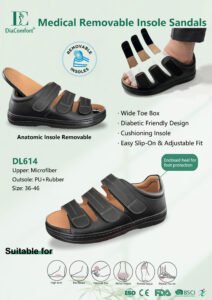
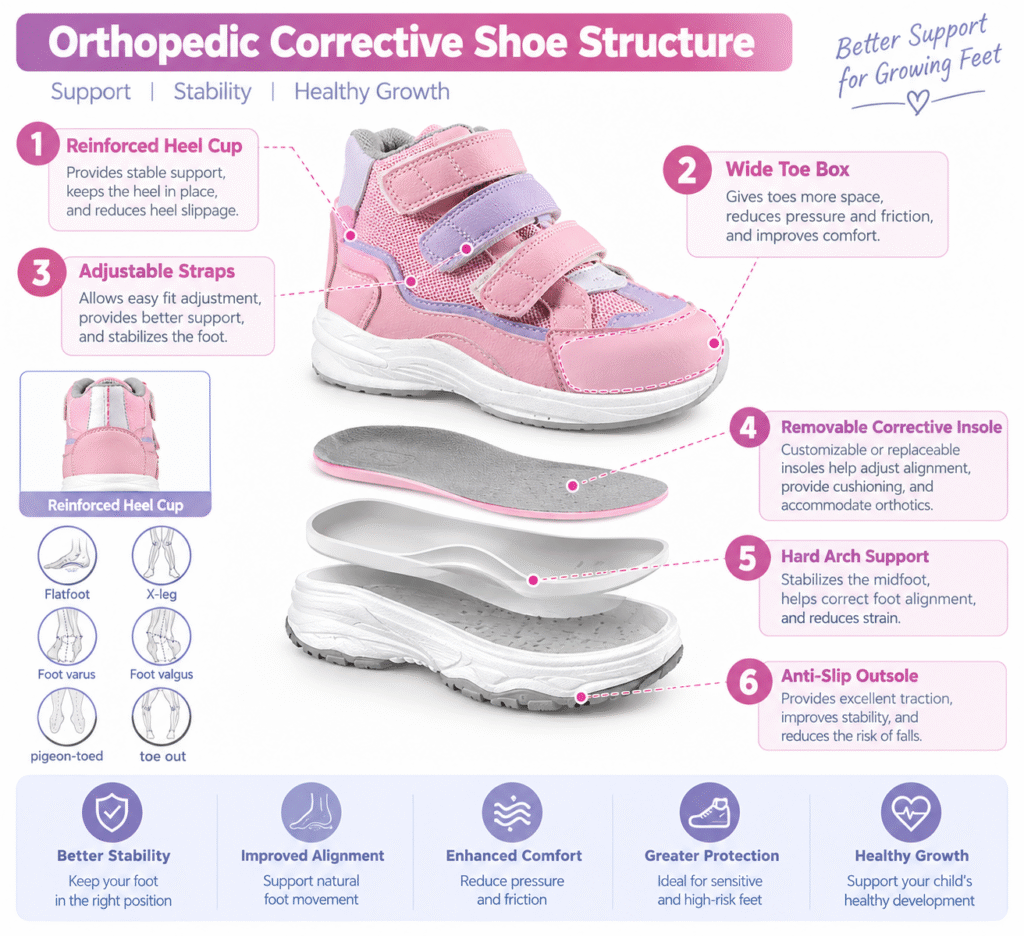
The orthopedic shoes adjust the force on the feet through the ergonomic structure, rather than forcibly correcting the bones. The shoe body features a reinforced hard heel cup, which securely fixes the heel and reduces the swaying and tilting of the heel during walking. An integrated arch support structure is built-in, which supports the collapsed arches and distributes the pressure on the sole.
The shoe head cavity is widened to provide sufficient space for the toes, alleviating the compression and friction caused by hallux valgus. A shoe insert placement slot is reserved inside the shoe to accommodate custom 3D corrective insoles, which can be adjusted for personalized fit according to different foot types.
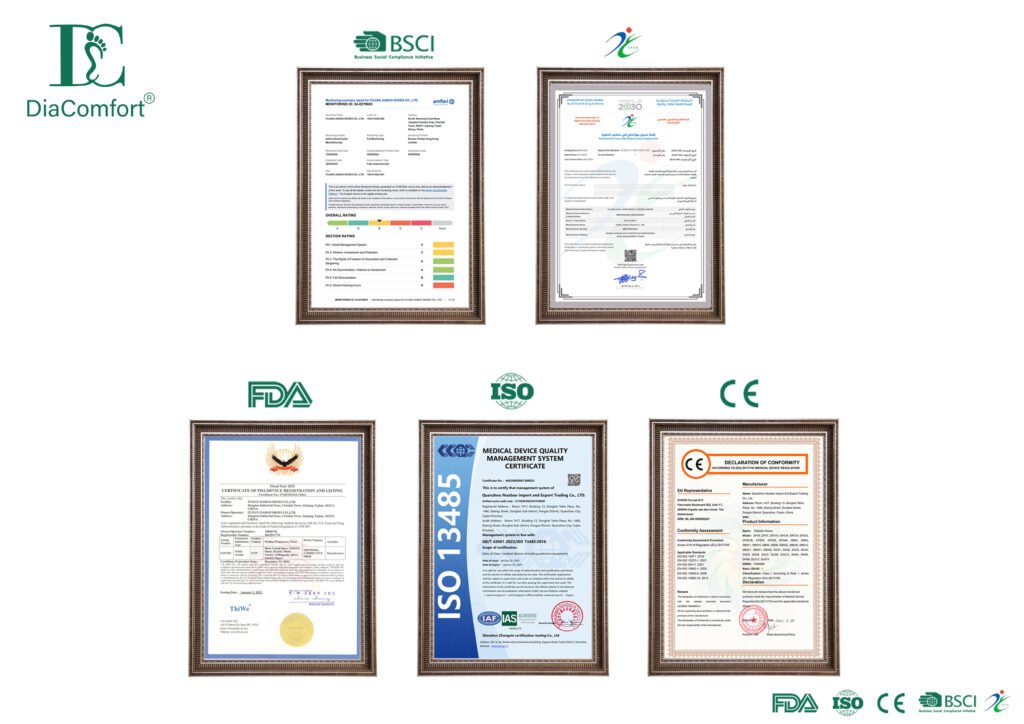
Our corrective shoe products have passed CE and ISO medical assistive device-related certifications and support OEM/ODM customization. We can adjust the shoe style, fabric, and color according to customer needs, and also provide complete product inspection materials to facilitate market entry by overseas institutions and distributors. At the same time, all styles are designed for comfort, with breathable fabric on the shoe surface, making it easy to avoid foot discomfort during long walks. They also balance the corrective function with the daily wearing experience. If you want to learn more about foot alignment issues, you can refer to professional resources from the American Podiatric Medical Association.
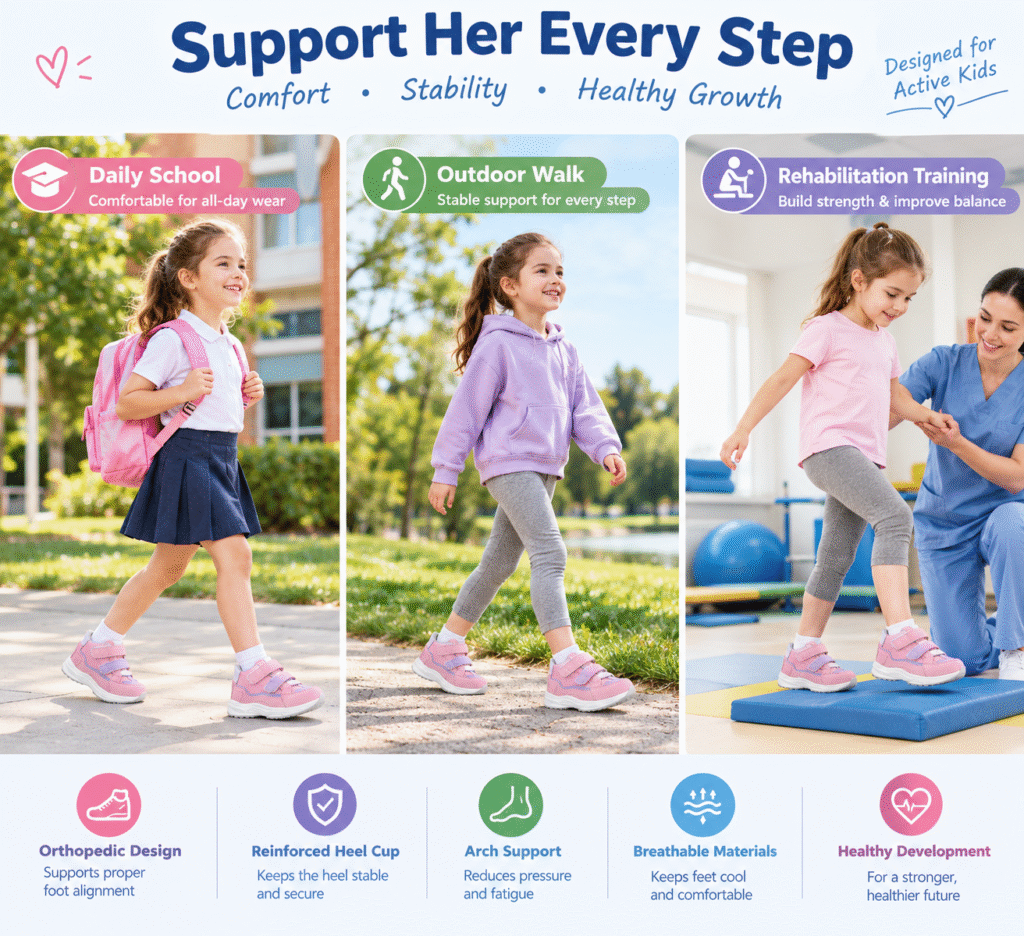
The corrective shoes are applicable in various scenarios, including daily activities, foot rehabilitation, long-term walking and heavy-lifting. They are suitable for children during their growth period with flat feet or foot overpronation. They can be worn during daily school and outdoor activities to assist in guiding the normal development of the feet.
For adults with flat feet, plantar fasciitis, or mild hallux valgus, they can be worn during daily commuting and walking to relieve foot fatigue when walking. For people undergoing foot surgery, they can be worn under the guidance of a doctor to stabilize the feet and reduce the risk of secondary injuries during the recovery period. Rehabilitation clinics and foot care centers can also purchase them in bulk and provide them as complementary rehabilitation aids to customers.
Additionally, cross-border retailers and overseas medical device distributors can incorporate these corrective shoes into their foot health product line, package them together with corrective insoles, and sell them to cover multiple customer groups such as families and rehabilitation institutions.
If you are looking for a high-quality supplier of corrective shoes, or if you want to know the shoe model parameters corresponding to different foot types, the minimum order quantity for customization, and the sample schemes, you can browse more details of corrective shoes and customized corrective insoles on our website. You can also directly contact our business team to obtain product manuals, certification documents and quotations.
We have a mature production system and support small batch sample trial orders. We can also simultaneously connect with Ali International Station and social media inquiry demands to provide stable and reliable foot orthopedic product solutions for global customers.
Q1: Can corrective shoes immediately correct the shape of the feet when worn?
A: The main function of corrective shoes is to adjust the force on the feet, stabilize the ankles, and relieve pain. They do not aim for immediate and forceful correction of the bones. During the child’s growth period, combined with rehabilitation training, the improvement effect will be more significant. For adults, whose bones have already been formed, the core value lies in alleviating the compensatory pain in the feet and knees, preventing the deformity from worsening continuously. It is recommended to have regular check-ups of the foot condition.
Q2: Can corrective shoes be used together with corrective insoles?
A: Yes, they can. Our corrective shoes have a separate insole compartment, which can accommodate custom 3D printed corrective insoles. These insoles can make precise pressure adjustments according to individual foot shapes, making them suitable for people with relatively obvious flat feet or overpronation.
Q3: Do your corrective shoes support OEM customization and export certification?
A: Yes, they do. Customization is available for shoe style, fabric, logo, packaging. The products have CE and ISO-related accessory certifications. Complete documentation is provided to meet customs clearance and institutional procurement requirements in markets such as Europe, the Middle East, etc. Sample orders and bulk orders are accepted.
Q4: Which groups of people are not suitable for wearing corrective shoes?
A: People with severe foot bone deformities, acute foot injuries, or severe foot ulcers should consult a orthopedic / podiatry doctor first to assess the situation before deciding whether to wear them.