Many parents pay close attention to the little details of their children’s walking: walking with an inward or outward gait, tiptoeing, or always being prone to falling and complaining of tired feet. Foot problems such as flat feet and outward-turned heels, if not intervened promptly during the early childhood stage, may further affect the knees and the posture of the legs as the child gains weight.
Choosing the right Children’s Orthopedic Shoes is not as simple as just buying a pair of hard shoes. Choosing the wrong Children’s Orthopedic Shoes can actually restrict the normal development of the feet. Today, I have compiled 5 selection tips that parents can easily apply to help you avoid purchasing mistakes and protect the healthy growth of your child’s feet.
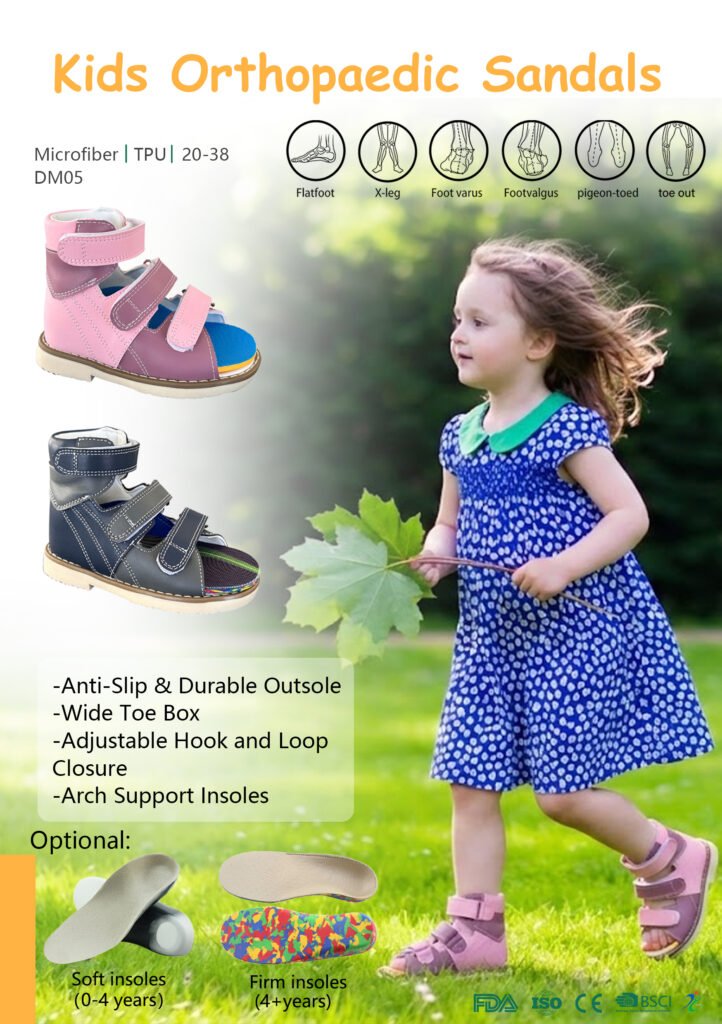
Pick Children’s Orthopedic Shoes with Hard Heel Cup to Stabilize Little Heels
When a child walks unsteadily, it is mostly due to insufficient stability of the heel. A qualified Children’s Orthopedic Shoes with a sturdy heel cup should be hard and strong. When you pinch the sides of the heel, it should not be easily flattened. It should firmly enclose the child’s heel, control the outward or inward rotation of the heel, and guide the foot to maintain a neutral position.
⚠️ Warning: Shoes with a flimsy heel have no support and cannot achieve corrective effects.
Select Children’s Orthopedic Shoes With Arch Support to Distribute Plantar Pressure
Children’s feet are still developing. Children with flat feet have collapsed arches and their soles tend to ache when walking. The insoles need to have adequate arch support to evenly distribute the pressure on the sole and reduce the burden on the calves and ankles. It is recommended to use **removable insoles**, which are convenient to take out for cleaning and can be replaced according to the development of the feet.
Choose Children’s Orthopedic Shoes With Wide Toe Box to Prevent Toe Compression
Children’s feet grow rapidly. When choosing Children’s Orthopedic Shoes, it is essential to select shoes with a wide toe area. The toes can freely stretch within the shoes without being squeezed or deformed. During the fitting process, there should be approximately one finger-width of space from the toe tip to the shoe head to prevent squeezing of the toes and the occurrence of hallux valgus.
Avoid purchasing Children’s Orthopedic Shoes with pointed toes or narrow shoe cavities as they will restrict the natural movement of the toes.
Children’s Orthopedic Shoes With Breathable Upper for Easy On & Off
We recommend choosing a shoe surface made of breathable mesh fabric combined with soft leather. Children tend to sweat a lot when they run and jump, and the breathable fabric can keep the inside of the shoes dry, reducing the risk of sweaty feet and heat rash. The Velcro strap style is more suitable for children than laces, as parents can easily adjust the tightness and children can put on and take off the shoes by themselves.
Choose Children’s Orthopedic Shoes With Multiple International Authoritative Certifications
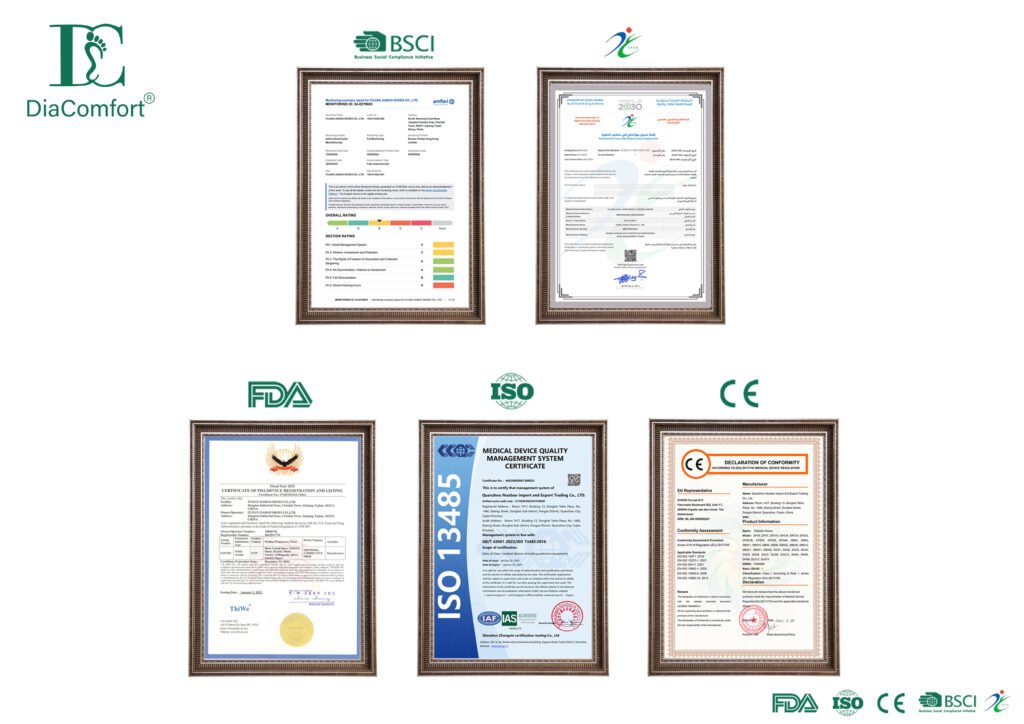
This Children’s Orthopedic Shoes have undergone multiple rigorous tests and possess 4 international authoritative certifications:
✅ FDA Safety Certification: All fabrics that come into direct contact with the feet have passed safety tests, protecting children’s delicate skin;
✅ ISO Quality Management System Certification: Standardized control throughout the raw material to finished product process, each pair of shoes has stable quality;
✅ CE European Union Certification: Compliant with European Union health and safety standards, the fabrics and processes have undergone multiple professional tests;
✅ BSCI Social Responsibility Certification: Production follows international labor and environmental protection norms, and the product can be traced throughout the process.
📌 Daily Foot Care Tips
- Measure your child’s foot length every 3 months. Children’s feet grow rapidly, and wearing shoes that are too small can hinder foot development.
- Walk barefoot on a flat surface for a short period each day at home to exercise the muscles in the sole of the foot.
- Do not wear slippers or soft-soled shoes with holes for a long time. These types of shoes lack support and are not conducive to the development of the arch of the foot.
- Take out the insoles and air them out regularly to keep the inside of the shoes dry and clean.
If your child has problems such as flat feet, outward-turned heel, or abnormal gait (such as inward or outward walking), and you want to choose Children’s Orthopedic Shoes that offer both support and comfort, you can refer to the above selection guidelines. Intervene as early as possible to protect the normal development of your child’s feet.
If you want to view our full range of supportive footwear for kids, visit our children’s orthopedic shoes product catalog.
You can also find more professional pediatric foot health knowledge on American Podiatric Medical Association (APMA).