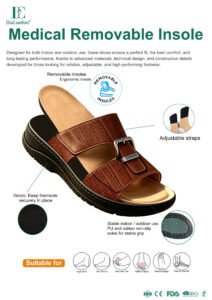
5 Key Points for Selecting Diabetic Off-loading Insoles | Distribute Foot Pressure, Walk with More Peace of Mind
Many diabetics are well aware that the foot’s sensory ability is affected by diabetes. Once blisters or cuts form on the sole of the foot, the wounds are difficult to heal and are prone to infection. The local pressure caused by daily walking or prolonged standing is a major factor contributing to foot injuries. Choosing the right Diabetic Off-loading Insoles can help distribute the pressure on the sole of the foot, reducing the risk of injury. Today, we have compiled 5 practical purchasing tips to help you find the right Diabetic Off-loading Insoles.
Choose styles that can fit the space inside the shoes first, and avoid blindly opting for thick insoles.
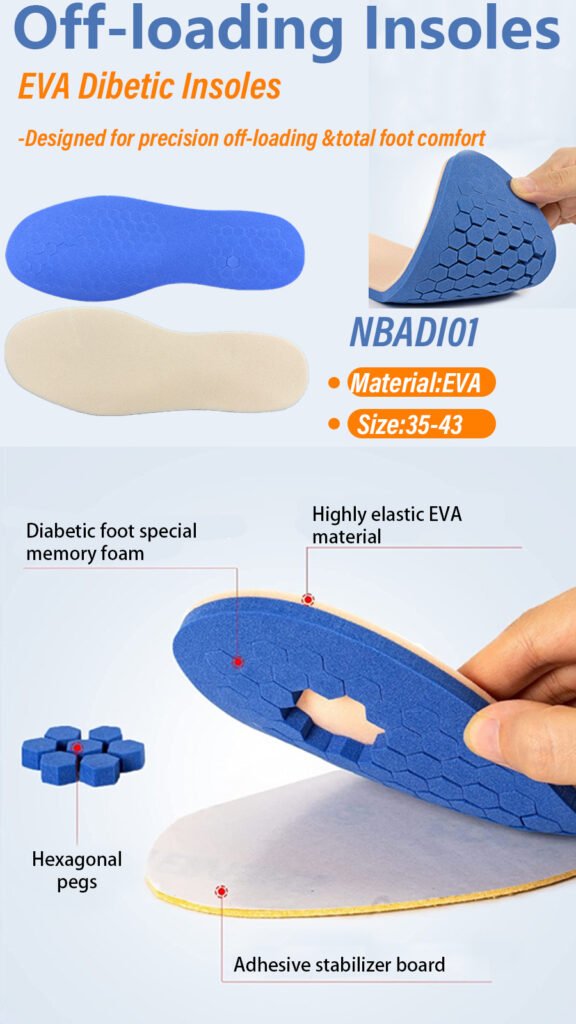
Many people think that the thicker the insole, the softer it feels when stepping on it. However, too thick insoles will occupy the internal space of the shoes and squeeze the toes, creating new pressure points instead. We recommend EVA anti-pressure insoles with smooth edges and no hard protrusions. After wearing them, the toes can naturally stretch. This NBADI01 Diabetic Off-loading Insoles features a layered structure, comes with hexagonal cushioning bumps, has an appropriate thickness, and is suitable for most daily shoe types.
Pay attention to breathable and moisture-absorbing materials to keep the soles dry
If the feet are constantly damp for a long time, it will increase the probability of skin damage and the growth of bacteria. The surface layer of the Diabetic Off-loading Insoles needs breathable and skin-friendly memory foam to absorb the sweat from the soles and keep the feet dry. The surface layer of our Diabetic Off-loading Insoles is specially designed diabetic foot memory foam, combined with high elasticity EVA base material, which combines breathability and cushioning. It is not easy to feel foot discomfort even during long walks.
It features a pressure-relieving design that distributes pressure evenly on the sole.
If the sole area is constantly under pressure, it will gradually form calluses and indentations, and in severe cases, it may lead to ulcers. High-quality Diabetic Off-loading Insoles need to evenly distribute the pressure on the heel and the forefoot. The hexagonal cushioning protrusions on the bottom of this insole, combined with the attached stabilizing support plate, can buffer the impact force upon landing, distribute the pressure concentrated on the sole area, reduce single-point compression, and achieve precise pressure relief.
⚠️ Important reminder: Diabetic Off-loading Insoles are only used as an auxiliary pressure-relieving tool and **cannot replace medical treatment**. If ulcers, redness, swelling, or severe foot deformities have already appeared on the foot, please consult a doctor first. You can refer to guidance on diabetic foot care from the American Podiatric Medical Association.
Stable support structure, reducing the movement of the insole during walking
When the insole slides back and forth during walking, it generates additional friction, increasing the risk of foot injury. This Diabetic Off-loading Insoles is equipped with a bonded stabilizing support plate, which fixes the shape of the insole and makes it less likely to shift or deform during walking. It is suitable for light activities such as daily walking and grocery shopping. If you have severe diabetic foot, please strictly follow the professional assistive device plan provided by your doctor.
Gradually adapt to it, and check the skin on your feet after each wear.
Do not wear it for a long time at once when using for the first time. It is recommended to wear it for 1 to 2 hours each day, and gradually increase the duration. After taking off the insoles, carefully check if there are any redness, blisters or indentations on the soles and toes. Do not cut the insoles yourself, and do not share insoles with others. If you notice any skin damage, redness, swelling or exudation, stop using immediately and seek medical attention.
Quality certification, more reliable use
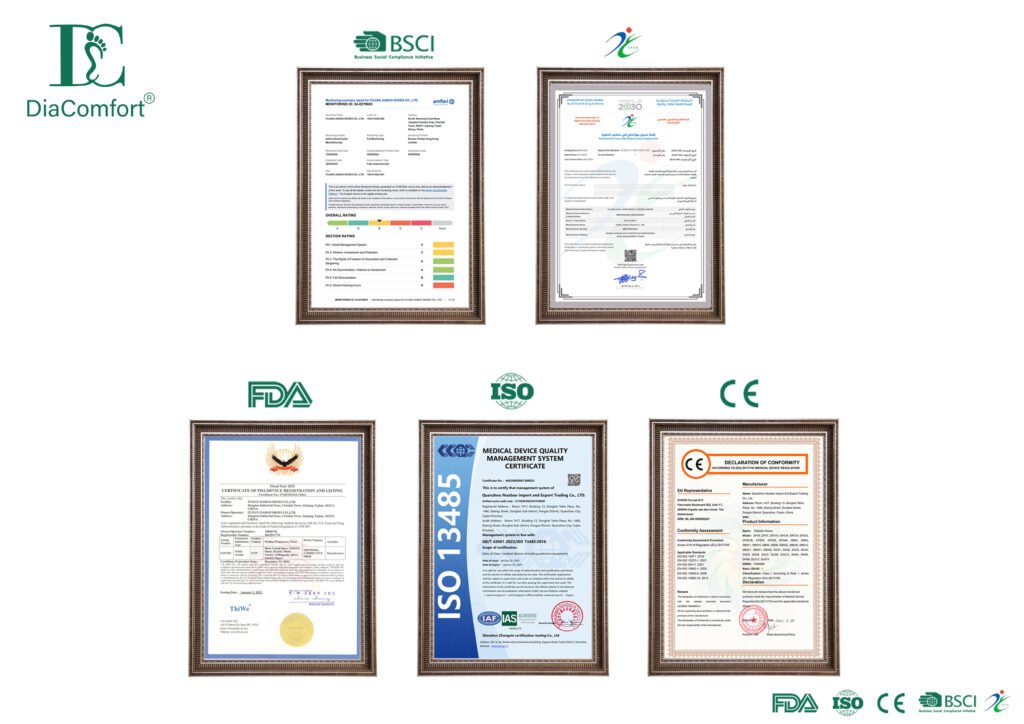
The DiaComfort EVA Diabetic Off-loading Insoles have undergone multiple rigorous tests and possess four international authoritative certifications: ISO, CE, FDA, and BSCI. [Check our custom orthotic insoles for flat feet]. From raw materials to finished products, the entire process is strictly controlled:
✅ FDA safety certification: All materials in direct contact with the skin pass safety tests, protecting the delicate skin of the feet
✅ ISO quality management system certification: Standardized production control ensures stable quality of each pair of insoles
✅ CE European certification: Compliant with EU health and safety standards, the fabric and production process undergo multiple professional inspections
✅ BSCI social responsibility certification: Production follows international labor and environmental norms, and the product can be traced throughout the process
Summary
When choosing Diabetic Off-loading Insoles, don’t blindly pursue overly soft or thick materials. The key points to consider are whether the thickness is suitable for the shoes, the breathability of the material, the pressure distribution structure, and the stability of support. At the same time, it is important to follow a gradual fitting process and conduct regular foot checks. Selecting the right Diabetic Off-loading Insoles can reduce the burden on the feet during walking and protect the foot health of diabetic patients.