Many people cannot distinguish between ordinary soft insoles and professional orthotic insoles. There are all kinds of arch pads and shock-absorbing pads available online, making it confusing. This article content will be starting from plantar biomechanics logic, clear professional correction the core difference between insoles, selection criteria, paragraphs and distinguish general with 3 d scanning custom, whether of discomfort of end users, rehabilitation clinics, or overseas wholesalers, distributors, can find suits own reference direction, Help you jump out of the “soft = comfortable, support, the higher the better,” the myth of choose and buy.
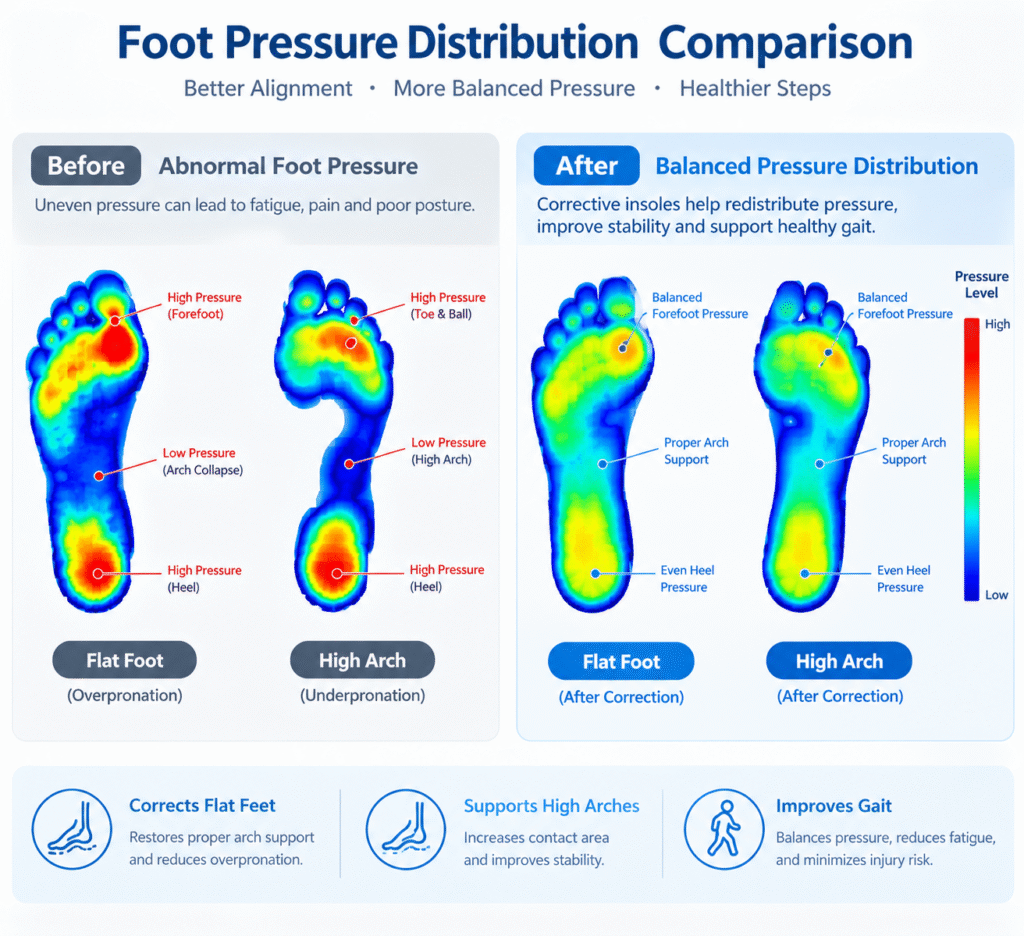
The feet serve as the base for standing and walking in the human body. Once the force line on the sole of the foot is deviated, it affects not just the sole itself. Flat feet, high arches, excessive inward or outward rotation, metatarsalgia, plantar fasciitis – in the early stages, most of these problems are merely a feeling of soreness and swelling on the sole after prolonged standing. Many people simply buy a foam cushion to temporarily place on their feet, feeling soft and comfortable for a short period of time. However, these products lack a rigid supporting structure and will soon be flattened under pressure, unable to correct abnormal gait.
Long-term imbalance of the force line will cause compensatory pressure to continuously be transmitted to the ankle, calf, knee, and even the waist and hips. Gradually, a series of chain problems such as repeated tightness in the calf muscles, hidden pain in the knee, and fatigue in the waist and hips will arise. According to the American Podiatric Medical Association, untreated abnormal foot force lines can gradually lead to chronic lower limb discomfort.
Whether it is ordinary consumers or businesses providing foot rehabilitation or foot assistive devices, understanding the evaluation criteria for professional orthotic insoles can help avoid choosing the wrong products and continuously aggravating foot injuries. The purchasing end can also better identify reliable supply chains and ensure the stable delivery of compliant products.
Professional orthotic insoles redistribute the pressure on the sole of the foot through a zone-supported structure, rather than forcibly lifting the arch. Our products feature a contour design that conforms to the biomechanics of the foot, with different hardness support areas for the arch, heel, and forefoot: the heel stabilizing cup fixes the heel and prevents excessive foot rotation; the arch support pad takes on the weight in the middle, reducing the continuous tension on ligaments; the forefoot decompression groove disperses the concentrated pressure at the metatarsal position.
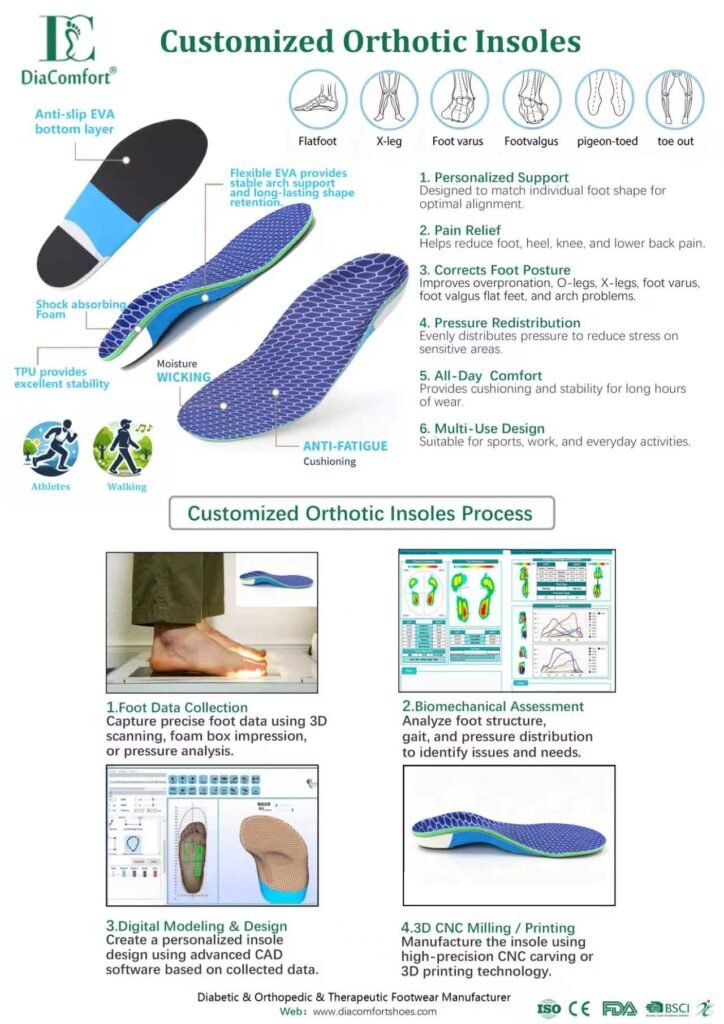
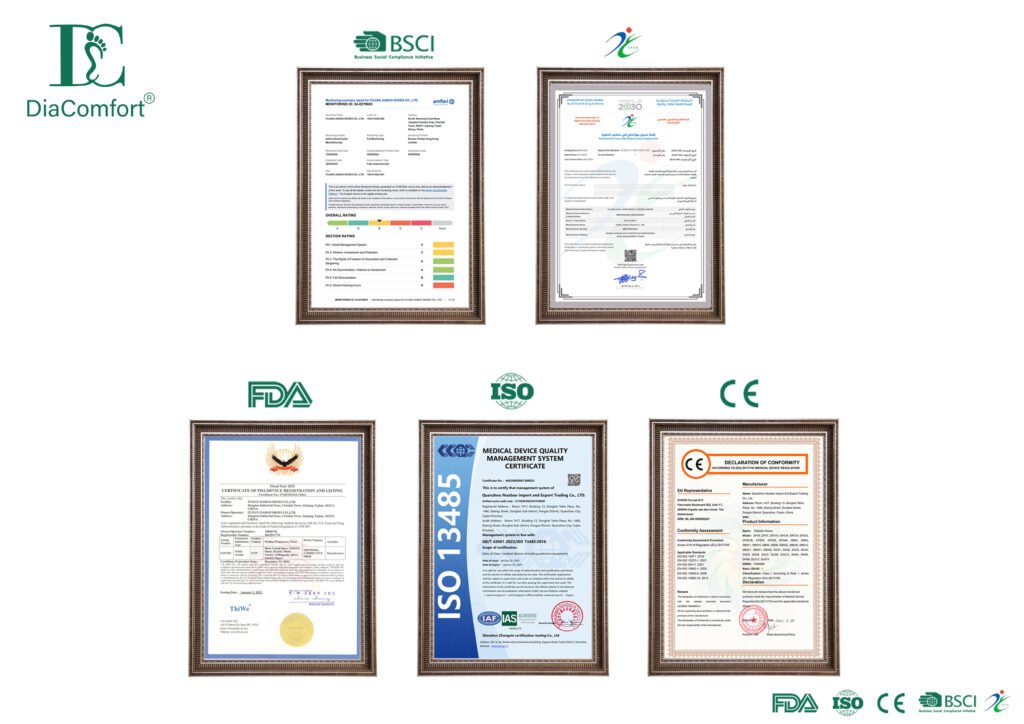
The base material is made of high-density EVA, medical-grade PU, TPU and other compressible materials that do not collapse easily under long-term pressure; at the same time, it can support 3D foot scan data customization, adjusting the support height and inclination angle according to each person’s sole scan report. The product has CE and ISO-related qualifications, allowing for batch standardized orders, and also supports custom sizing, logos, and packaging solutions, adapting to the entry requirements of different markets.
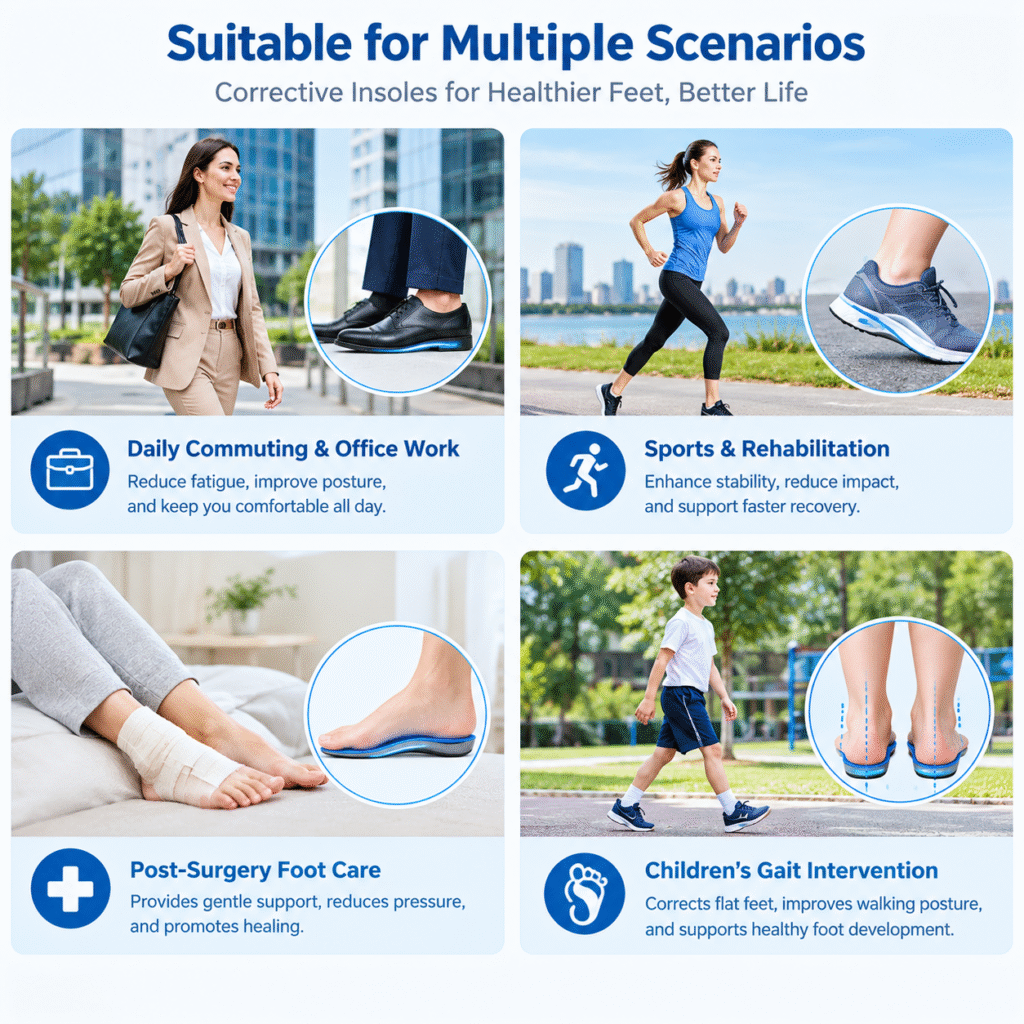
This type of orthotic insoles is suitable for a wide range of scenarios.
Office workers and service industry personnel need to stand and walk all day, and using it can alleviate the fatigue in the sole caused by continuous weight-bearing;
Runners and hikers use it to improve abnormal force application and reduce the probability of sports injuries;
People with flat feet, high arches, and hallux valgus accompanied by sole pain, can wear them daily and wear them for a long time to relieve compensatory discomfort;
In the scene of pediatric gait intervention, it can be used in combination after being evaluated by a doctor to assist in guiding the normal development of the foot arch;
After foot surgery or during the rehabilitation stage of plantar fasciitis, the decompression model can also be selected to disperse the pressure on the wound surface.
In terms of styles, there are also thin half-size pads that are suitable for leather shoes and narrow-style casual shoes, and thick support models are suitable for workwear shoes and sports shoes, covering different shoe type requirements.
If you are looking for a supply of orthotic insoles suitable for retail terminals and clinics, or if you want to know the parameters, minimum order quantity and certification materials of custom scanning models and ready-made general models, please contact us.
We also handle a series of supporting corrective shoes and pressure reduction accessories. You can visit the product page to view the complete specifications and real photos of samples. You can also browse more customer cases and real test videos on Alibaba International Station and social media accounts, and communicate about sample testing and cooperation plans.
Q1: What are the differences between orthotic insoles and ordinary soft insoles or arch soft pads?
A: Comfort-oriented inserts focus on softness and shock dissipation. Made of low-density foam, they lack rigid support and compress easily under repeated weight bearing, offering only temporary cushioning without correcting abnormal plantar force distribution.
In comparison, therapeutic foot orthoses feature biomechanically informed zoned support. A molded heel shell limits excessive rearfoot movement, an arch buttress delivers stable bracing, and forefoot cutouts relieve focal pressure. This design reduces uneven loading from pes planus, pes cavus and rearfoot malalignment, lowering the risk of secondary overuse injuries to ankles and knees.
Q2: Is it true that the harder the orthotic insole, the higher the arch it can support, the better the effect will be?
A: This common misunderstanding needs clarification. Well-designed foot orthoses deliver tailored, moderate support while fitting the foot anatomically, rather than forcing the medial arch upward. Excessively rigid or high-support structures can squeeze plantar tissue, cause soreness and disrupt natural gait. We adjust arch shape and material firmness based on foot scan results and foot morphology. Ready-made models come in three support levels, while custom orthoses can be fine-tuned individually to balance support and wearing comfort.
Q3: Who are suitable for wearing orthotic insoles? Who is not recommended to wear them by themselves?
A: Suitable users include individuals with pes planus, pes cavus, excessive foot pronation or supination, plantar fasciitis, metatarsalgia, post-standing plantar discomfort, calf strain and mild hallux valgus. They are also applicable for paediatric gait correction (under medical evaluation) and foot post-surgical rehabilitation.
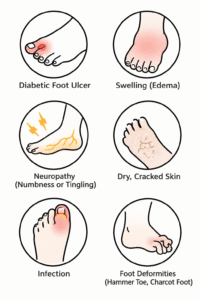
Self-administration is not advised for patients with open foot lesions, advanced diabetic foot ulcers or acutely inflamed ankle sprains. These conditions require professional medical guidance prior to use.
Q4: Can the orthotic insoles be directly placed inside my existing shoes? Are there any shoe type requirements?
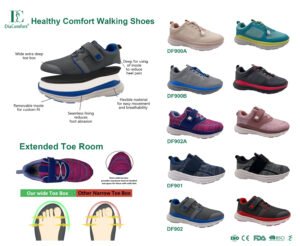
A: Most athletic shoes, safety boots and high-top casual shoes work well with these inserts. Slim ready-made orthoses suit dress shoes and narrow formal footwear. Thicker supportive variants require sufficient inner space; remove the original shoe liner before placement. Pointed-toe or shallow slip-on shoes are generally incompatible and may cause uncomfortable pressure.
Q5: How long does it take to notice improvement after wearing the orthotic insoles? Will it be uncomfortable at first?
A: Your feet need time to adapt to new plantar loading. Mild soreness in the first 3–7 days is normal. Start with 1–2 hours daily and gradually increase wear time. Most users feel relief from foot fatigue after 2–4 weeks. Skeletal and gait adjustments take longer, and children require regular follow-up checks. Stop wearing the orthoses immediately if persistent pain or redness occurs, and check whether the fit is improper.
Q6: Do you have ready-made general models, or can you also make 3D scanning customized orthotic insoles? How long does the customization process take?
A: We offer two types of orthotic insoles. Standard versions use proven moulds and are kept in stock for wholesale, clinic supply and retail sales. 3D-scanned custom orthoses are built from individual foot scan data, with adjustable arch shape, hardness and pressure relief zones for unusual foot shapes, post-surgical recovery and complex foot conditions. Custom lead times depend on order size. We accept sample orders and stable large-volume production.
Q7: What certifications does the product have and can it be exported to the European and American markets?
A: Our orthotic inserts comply with CE and ISO requirements. We can supply certification documents to help clinics and overseas distributors complete customs clearance and market access. Custom services such as logo printing and colour box packaging are also available upon request.